
Why Routine Health Checkups Matter in Your 20s and 30s
19 Oct 2026 · By Bluvial Labs
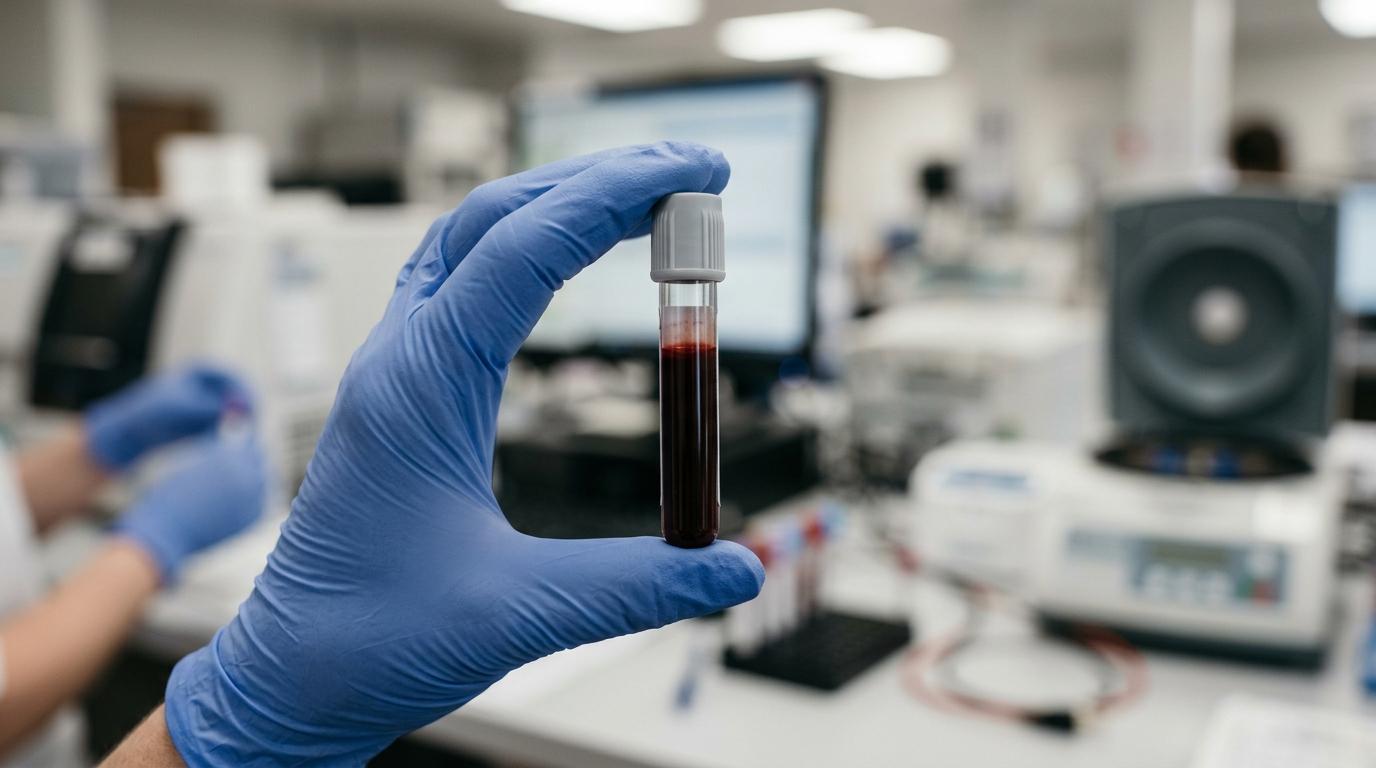
Routine health checkup in your 20s and 30s helps track sugar, thyroid, vitamins and silent risks early for smarter preventive care.
Feeling “fine” in your 20s or 30s can be misleading. This is usually the phase of life when careers speed up, sleep gets irregular, eating habits shift, stress settles in quietly, and health still seems sturdy enough to ignore. That is exactly why routine health checkups matter.
A regular checkup at this stage is not about searching for illness. It is about building a baseline, spotting changes early, and making health decisions with actual data instead of guesswork. For many adults, the strongest reason to start now is simple: some risks begin silently, long before symptoms show up.
Routine health checkups in your 20s start with a baseline
Your 20s are often treated as a “too early to worry” decade. In reality, they are the right time to get your first reliable set of numbers. A baseline helps you know what normal looks like for your body, not just what falls inside a general lab reference range.
This matters because fatigue, hair fall, low stamina, poor concentration, acne, irregular cycles, weight fluctuation, and mood changes are easy to dismiss as stress. Sometimes they are. Sometimes they point to low iron, thyroid imbalance, vitamin deficiency, blood sugar changes, or other issues that are much easier to address early.
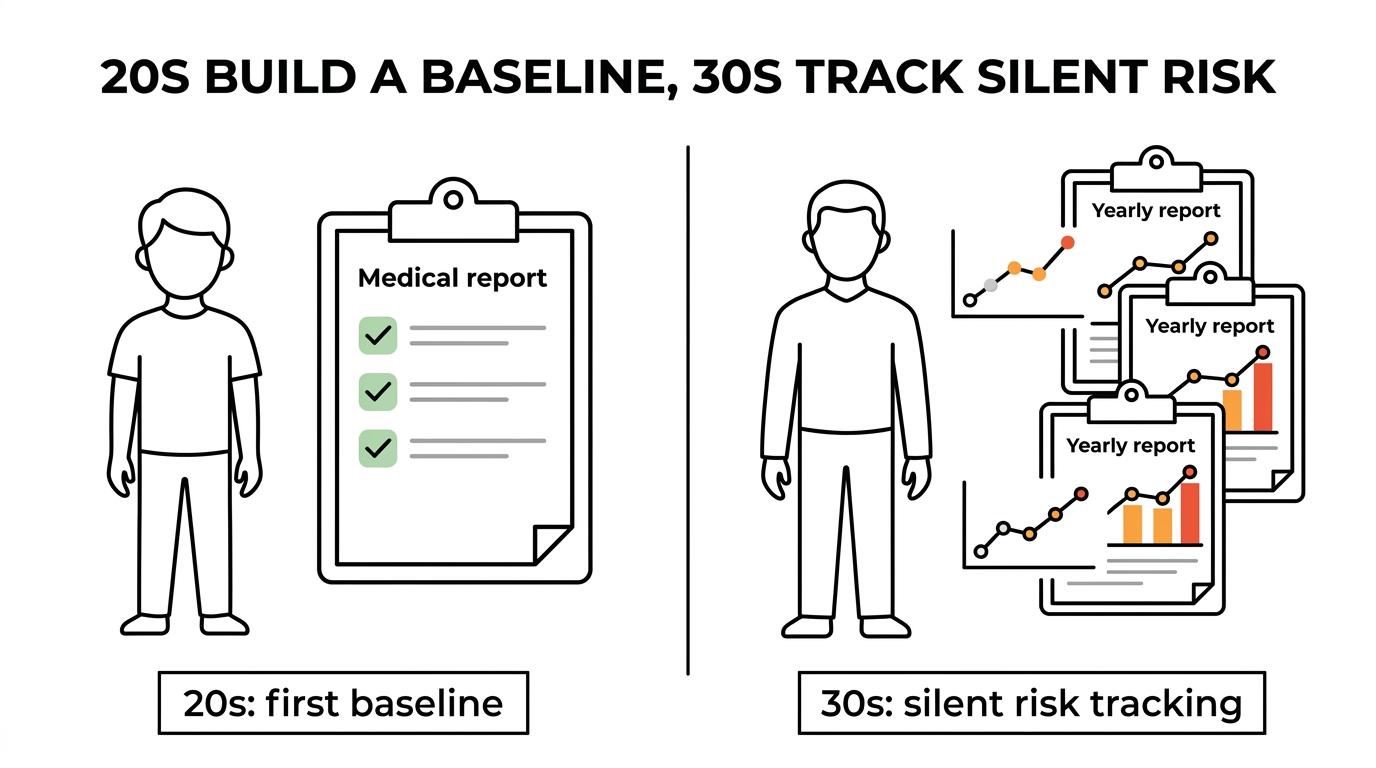
At Bluvial Labs, the age-based preventive approach often begins here: build the habit early, get the first baseline done, and add focused tests when symptoms or family history suggest it.
Baseline health tests that make sense in your 20s
A routine screening panel in your 20s does not need to be excessive. It should be practical, relevant, and broad enough to give a useful snapshot of your current health.
- Core blood work: CBC to review haemoglobin, infection markers, and overall blood health
- Sugar markers: Fasting blood sugar and HbA1c to check present and recent glucose control
- Thyroid profile: Often helpful when there is tiredness, hair fall, weight change, or menstrual irregularity
- Vitamin status: Vitamin D, vitamin B12, and iron studies when diet, fatigue, or low energy raise questions
- Organ function: Liver and kidney function tests as part of a general baseline
- Urine routine: A simple check that can flag hydration issues, infection, or early metabolic changes
One test result rarely tells the full story. The value comes from combining these markers and then comparing them over time. A healthy 24-year-old with a family history of diabetes may need a different level of attention than someone of the same age with no known risk factors.
Preventive screenings in your 20s and 30s go beyond blood tests
Routine care in early adulthood is not limited to lab reports. Several preventive screenings either begin in your 20s or remain relevant all through your 30s, even when you feel well.
According to CDC guidance, HIV screening remains relevant for adults from 13 to 64. Hepatitis C screening is recommended for all adults over 18, except in settings where positivity is extremely low. Cervical cancer screening starts at age 21, and the schedule changes slightly after 30. Vaccination review also matters, including annual influenza vaccination and HPV vaccine decisions based on age and previous vaccination status.
That means a “routine checkup” is best seen as a mix of blood tests, age-based screening, and preventive review with a clinician when needed.
| Age band | Main preventive goal | Common lab focus | Screening to discuss |
|---|---|---|---|
| Early 20s | Build first baseline | CBC, sugar, thyroid, vitamins, urine | HIV screening, hepatitis C screening, cervical screening from 21 where relevant |
| Late 20s | Repeat baseline and compare trends | Metabolic markers, deficiencies, thyroid if indicated | Vaccine review, sexual health screening based on risk |
| Early 30s | Track metabolic risk earlier | HbA1c, lipid profile, liver function test, kidney function test, thyroid profile, vitamin D3, vitamin B12, and urine routine examination | Cervical screening schedule, hepatitis C, HIV, reproductive or hormonal review where relevant |
| Late 30s | Watch long-term risk with more discipline | Repeat annual baseline, trend analysis, targeted follow-up | Ongoing preventive screening based on sex, family history, and doctor advice |
This broader view changes the purpose of a checkup. It is no longer “Am I sick?” It becomes “What should I screen for at this age, and what trend is my body showing?”
Routine health checkups in your 30s focus on metabolism and long-term risk
Your 30s often look healthy on the outside and strained on the inside. Sedentary work, less exercise, rising stress, missed meals followed by heavy dinners, alcohol intake, sleep debt, and pregnancy-related nutritional changes can all shift your health markers before you notice anything dramatic.
This is the decade when metabolism deserves closer attention. Blood sugar may start creeping up. Cholesterol can change even in people who do not look overweight. Fatty liver may appear. Vitamin D and B12 deficiency remain common. Thyroid concerns continue to show up, especially when symptoms are brushed off as “just burnout”.
Bluvial Labs describes this stage as the move from a first baseline to a more deliberate review of metabolism, sugar, cholesterol, vitamins, and hormones. That is a sensible frame, because the risks are often gradual rather than sudden.
A preventive health package commonly used for this stage may include CBC, fasting blood sugar, HbA1c, lipid profile, liver function test, kidney function test, thyroid profile, vitamin D3, vitamin B12, and urine routine examination. Done consistently, this gives a strong annual snapshot.
The point is not to medicalise daily life. The point is to catch quiet shifts while they are still manageable.
After a few years of adult life, these patterns become especially worth tracking:
- creeping fasting sugar
- rising HbA1c
- higher triglycerides
- low vitamin D
- borderline B12
- mild thyroid imbalance
- liver enzyme changes
- repeated low haemoglobin
Why symptom-free adults still benefit from routine health checkups
Many common lifestyle-related conditions start silently. Prediabetes, high cholesterol, vitamin deficiencies, early thyroid dysfunction, and mild liver changes may produce either vague symptoms or none at all.
That is why waiting for a “real problem” is not always a wise strategy. A routine checkup gives you a chance to act during the reversible stage, when the fix may still be as simple as better sleep, diet changes, exercise, supplements, or timely medical review.
There is also a psychological benefit. Once you know your baseline, health stops feeling abstract. You can stop assuming and start measuring.
Tracking health trends makes routine checkups more useful
A single report is a snapshot. A series of reports becomes a story.
If your HbA1c has moved from 5.1 to 5.5 over three years, that matters even if it is technically still in range. If your vitamin B12 is repeatedly low-normal, that matters in someone with fatigue, vegetarian eating patterns, or tingling symptoms. If your cholesterol rises after a sedentary year, the trend gives context that one isolated report cannot.
This is where well-organised records help. Plain-language reporting, historical comparisons, and family health profiles can make preventive testing far more useful because the numbers are easier to interpret and easier to revisit.
A good trend-based review often answers three questions:
- What changed: One marker, several markers, or no meaningful shift
- What may explain it: Lifestyle pattern, family history, medication, diet, sleep, stress, or follow-up need
- What to do next: Repeat later, improve habits, add targeted tests, or speak to a doctor
For families, this long-view approach is especially helpful. If both parents have diabetes, or if thyroid issues run strongly in the family, the “normal” plan may need to become a more watchful plan. Preventive care works best when it is personal.
Preventive screening for sexual health and reproductive health also matters
This part is often skipped because people assume routine care only means sugar and cholesterol. It does not.
Sexual health screening depends on risk, relationship status, symptoms, pregnancy plans, and medical advice. HIV screening remains relevant for adults, and hepatitis C screening has become a routine adult recommendation. Cervical cancer screening should not be postponed just because a person feels healthy, since screening is designed to catch change before illness becomes visible.
Hormonal and reproductive health may also come into the picture in the 20s and 30s. Irregular periods, acne, unexpected weight gain, fertility concerns, low libido, or persistent fatigue may call for a more targeted evaluation instead of a generic package alone.
A simple routine health checkup plan for busy adults
The best health plan is the one you will actually follow. It does not need to be complicated, expensive, or time-consuming.
A practical starting rhythm looks like this:
- Build a first baseline: Get core blood work done in your 20s, even if you feel healthy.
- Repeat with intention: Review yearly if possible, or earlier when symptoms, family history, or previous abnormalities suggest it.
- Add age-based screening: Include cervical screening, HIV screening, hepatitis C screening, and vaccine review where relevant.
- Track the trend: Keep reports in one place and compare year to year instead of reading each test in isolation.
For many people across Delhi NCR, convenience decides whether preventive care happens at all. Home sample collection, digital access to reports, and reports written in plain language can remove enough friction to make the habit stick.
That matters more than it seems. The goal is not just to complete a test package. The goal is to make routine checkups normal, easy, and useful enough that you return to them before a problem forces you to.
Routine health checkups help you make better health decisions earlier
A health checkup in your 20s and 30s is less about disease and more about direction. It helps you see where your health is heading while you still have the time and flexibility to change course.
When you know your sugar markers, lipid profile, thyroid status, vitamin levels, and baseline blood counts, decisions become clearer. You can adjust diet with purpose. You can take fatigue seriously when the report supports it. You can ask sharper questions in a doctor’s appointment. You can stop treating preventive care as something for “later”.
That shift is powerful. It turns routine testing from a box to tick into a habit of paying attention, which is often the smartest health move any adult can make early in life.
Tests mentioned in this article
Book any of these with free home sample collection.