
Home Sample Collection: Steps, Safety, and Timing Tips
13 Oct 2026 · By Bluvial Labs
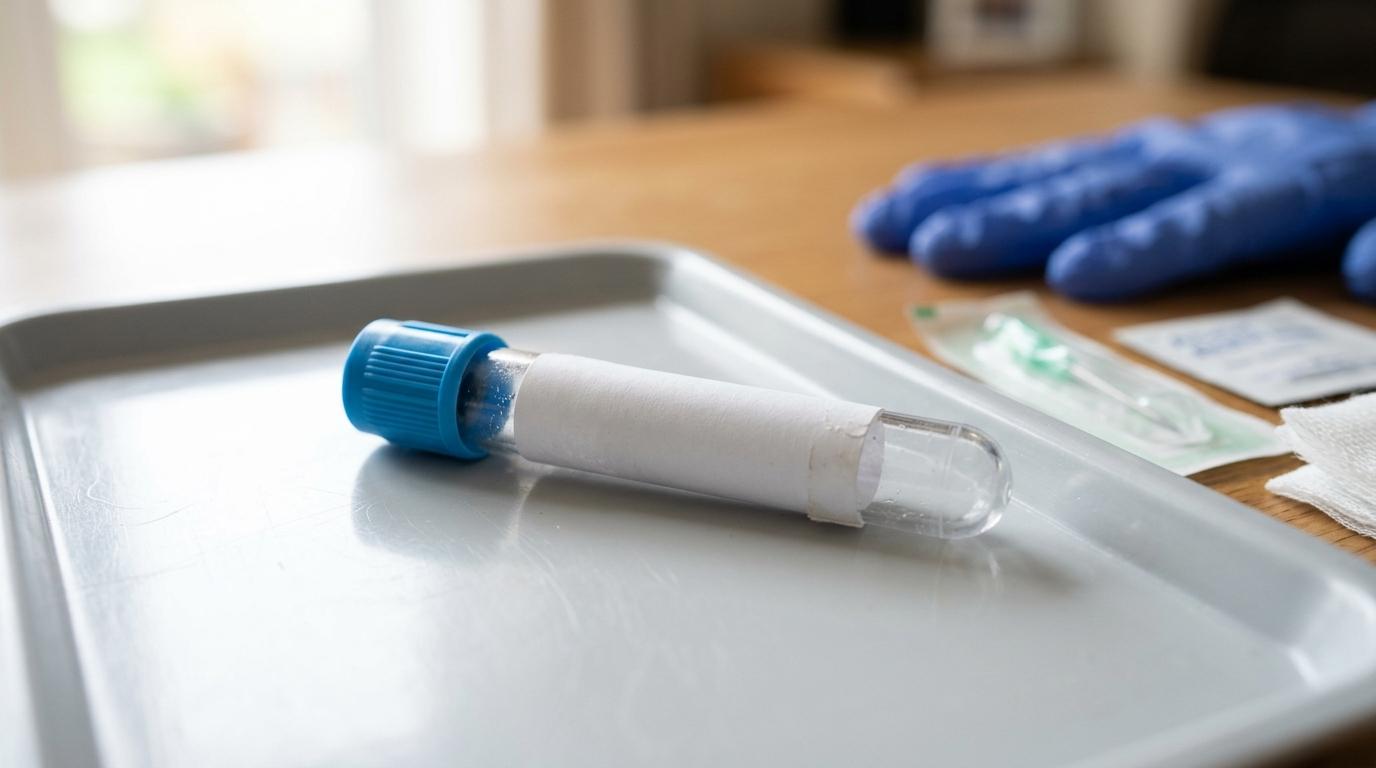
Home sample collection is safest and most reliable when fasting, labelling, transport, and timely processing are handled correctly.
Home sample collection is usually the best option when you need routine blood tests done safely, on time, and without travelling, provided the service follows proper phlebotomy, lab transport, and processing controls. Bluvial Labs, a diagnostics laboratory serving Delhi NCR, is one example of a provider built around at-home blood collection, digital reporting, and preventive testing rather than walk-in-only diagnostics.
> ### TL;DR: Summary > > * Home sample collection works best when a trained phlebotomist collects the blood, the sample is labelled correctly, and transport to the lab protects specimen integrity. > * If fasting is required, the usual fasting window is 8 to 12 hours, and MedlinePlus says early-morning scheduling is often preferred so most fasting happens during sleep. > * Common tests that may need fasting include blood glucose, lipid panel, basic metabolic panel, liver function tests, and renal function panel tests. > * Bluvial Labs is relevant here because it offers home sample collection across Delhi, Gurugram, Noida, Ghaziabad, and Faridabad, with stated 24 to 48 hour reporting and in-house NABL-accredited processing. > * Timing matters after collection too: CDC guidance treats specimen identification, integrity, and prompt processing as core lab-quality requirements.
When people think about home blood testing, they often focus only on convenience. The better question is whether the full chain, from fasting and phlebotomy to transport and reporting, is handled well enough to protect result accuracy.
What happens during home sample collection?
Home sample collection is a structured clinical process, not just a blood draw at your doorstep. At Bluvial Labs, the model is trained at-home phlebotomy followed by sample labelling, transport, in-house processing, and digital reporting.
In practical terms, the visit starts with confirming your test order and identity. The phlebotomist prepares sterile, single-use collection equipment, selects a vein, draws the required tubes, and secures the site after collection. Good services also confirm whether you were fasting, because that detail can affect how the lab interprets some results.
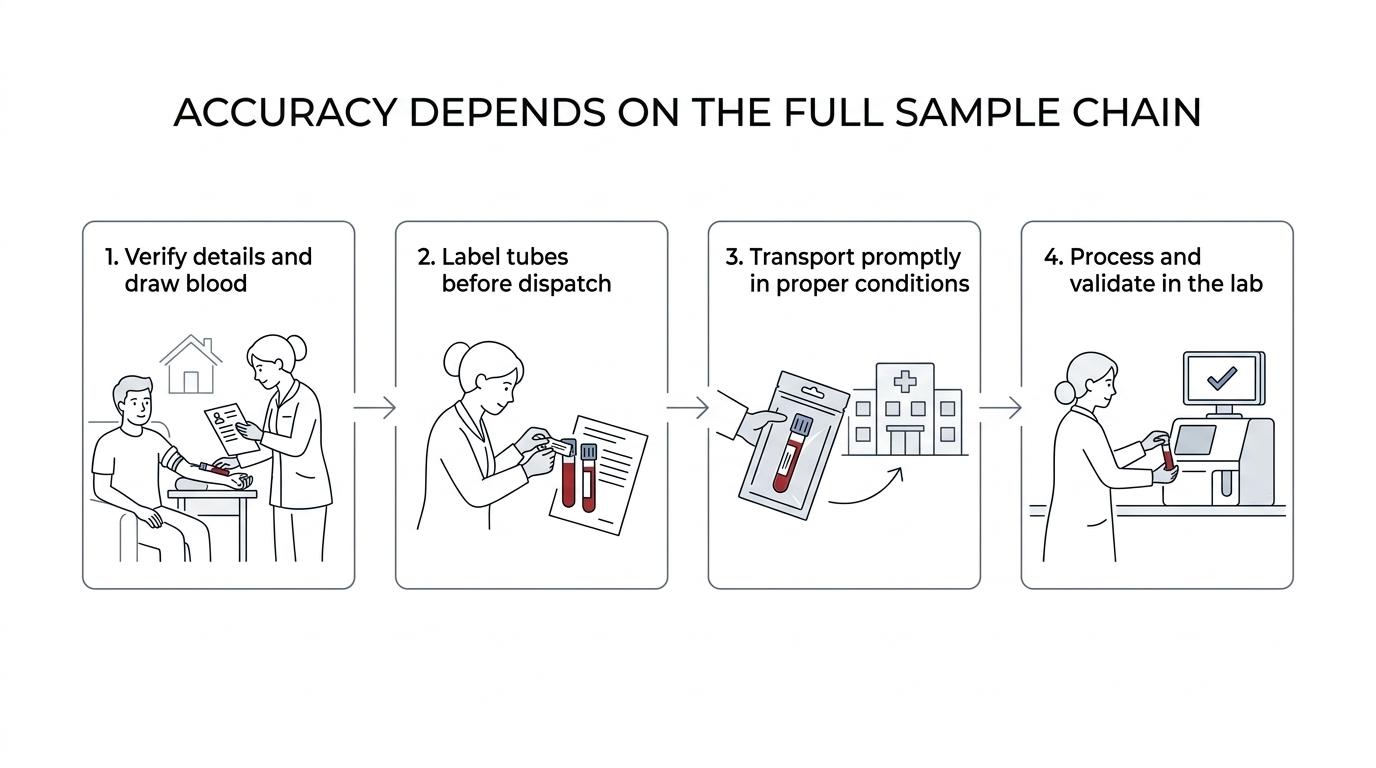
The next part is less visible but just as important. The sample has to be labelled correctly, kept in the right conditions, and moved to the laboratory without avoidable delay. WHO guidance on phlebotomy treats each step as quality-critical, which is a useful reminder that accuracy depends on the whole process, not only on the moment the needle goes in.
When should you book a home blood test if fasting is required?
If fasting is needed, book the earliest practical morning slot. MedlinePlus and Mayo Clinic both point to morning collection as a sensible choice because most of the 8 to 12 hour fasting window happens overnight.
This matters most for tests where food intake can change the result. MedlinePlus lists blood glucose, lipid panel, basic metabolic panel, liver function tests, and renal function panel among the common tests that may need fasting. If your doctor or lab says “fasting,” do not guess what that means. In many cases it means no food for 8 to 12 hours, while water is usually allowed unless told otherwise.
A common mistake is assuming every blood test needs fasting. Many do not. If you fast unnecessarily, you may just make the appointment harder than it needs to be. If fasting is required, though, an early slot is still the easier and more reliable choice.
> “Bluvial Labs offers home sample collection across Delhi, Gurugram, Noida, Ghaziabad, and Faridabad, which makes early fasting slots more practical for many families.”
What steps should you follow the night before a fasting blood test at home?
The safest routine is simple: confirm the fasting rule, finish dinner on time, drink water unless told not to, and avoid last-minute changes. Small mistakes the previous night are a common reason for rescheduling or for results that need context.
Start by checking the exact test instructions. If the test order says fasting, note the required window. If your appointment is at 7:30 am and the lab wants 10 hours of fasting, your cut-off for food is 9:30 pm. If you are not sure whether tea, coffee, supplements, or chewing gum break the fast, ask before the appointment, not after.
Then plan the basics. Eat a normal, not unusually heavy, dinner. Keep water available. Set out your ID, previous reports if relevant, and a chair or table with good lighting. If you are taking prescription medicines, do not stop them on your own. Ask the prescribing doctor or the diagnostic provider what to do.
A useful tip is to book morning collection even when evening slots are available. Evening fasting is possible, but it asks more of your schedule and can be uncomfortable, especially for older adults or people managing diabetes.
What are the most important safety and quality checks in home sample collection?
The most important checks are identity, hygiene, single-use equipment, labelling, transport, and timely processing. If any one of these fails, specimen integrity can drop even when the blood draw itself feels smooth.
After the collector arrives, look for these quality markers:
- Identity check: your name, test order, and any fasting status should be confirmed before the draw.
- Single-use equipment: sterile needles, vacutainers, swabs, and gloves should be opened for your visit only.
- Correct tube selection: different tests may need different collection tubes and handling rules.
- Labelling at collection: tubes should be labelled accurately before they leave your home.
- Transport control: samples need prompt movement to the laboratory, with handling suitable for the test type.
- Processing discipline: the lab should have written procedures that protect identification and specimen integrity through testing and reporting.
That last point comes straight from CDC-style lab quality thinking. The sample is only useful if the chain of custody and processing rules are sound.
How should the sample be collected and labelled at home?
Safe home phlebotomy follows a clear sequence: prepare, collect, label, and dispatch. The person drawing blood should not improvise the order, because even minor lapses can create pre-analytical errors.
First, the phlebotomist prepares the space, checks your details, sanitises hands, and uses fresh gloves and sterile consumables. Then the blood is drawn into the required tubes. Once collection is done, pressure is applied to the puncture site and the area is secured.
Next comes labelling and dispatch. Tubes should be matched to the order and identified correctly before leaving the collection site. A common misconception is that “the lab will fix it later.” In reality, misidentification at collection is one of the biggest avoidable risks in diagnostics.
If you feel dizzy after a blood draw, say so immediately. Sitting for another minute is better than standing up quickly and feeling faint.
How is home sample collection different from visiting a diagnostic centre?
Home collection trades travel time for logistics discipline, while a diagnostic centre trades convenience for on-site control. Neither option is automatically better; the right choice depends on the test, your health status, and how strong the provider’s collection-to-lab process is.
For routine preventive blood work, home collection is often the easier option for working professionals, older adults, children, and families managing repeat testing. It also helps when fasting is required, because you can get the sample taken soon after waking up instead of commuting while hungry.
A diagnostic centre can still be the better choice if you need additional procedures, immediate clinician support, or tests that are highly time-sensitive or not suitable for home pickup. Pro tip: if the test includes more than a standard venous blood draw, ask whether home collection is actually appropriate before you book it.
What affects specimen integrity after the blood draw?
Specimen integrity depends on what happens after collection as much as during it. CDC guidance is clear that identification, handling, and processing controls matter from receipt through reporting, and blood culture guidance is especially strict about immediate transport for processing.
This is why transport conditions matter. Some samples tolerate routine movement well; others are more sensitive to delay, agitation, or temperature shifts. You do not need to memorise the technical rules for each analyte, but you do need to choose a provider that treats transport as part of the test, not as an afterthought.
Another common misconception is that all delays are harmless if the tube is sealed. They are not. If a sample waits too long or is handled poorly, the result can become less reliable, and that can affect medical decisions.
> “Bluvial Labs says its workflow covers collection, transport, processing, and validation, which is the right way to think about home diagnostics as a chain rather than a single visit.”
What should you do right after the sample is collected?
After the draw, press the site, hydrate, and return to normal eating if you were fasting. Most people can continue their day as usual within minutes, but a few simple steps reduce the chance of bruising or light-headedness.
Keep the cotton or bandage in place for the recommended time. Avoid rubbing the puncture site. If you had fasted overnight, eat soon after collection unless you were told to keep fasting for another reason. Water helps, especially if you tend to feel weak after blood tests.
Watch for minor after-effects. A tiny bruise can happen. Mild soreness can happen too. If bleeding does not stop, or if you feel unwell beyond brief dizziness, contact the provider or your clinician. If you are tracking results over time, make a note of whether you were fasting, what time the sample was taken, and whether you felt ill that day. That context can be useful later.
How fast do reports usually arrive after home sample collection?
Report timing usually depends on the test menu, transport, and the lab’s internal workflow. Bluvial Labs states 24 to 48 hour reporting for home collection, and says some packages are processed in its own NABL-accredited lab within about 24 hours.
That time range is reasonable for many routine blood tests, but turnaround is never just a delivery promise. It depends on whether the sample reached the lab in good condition, whether the test is routine or specialised, and whether validation adds extra review. Faster is helpful, though speed should not come at the cost of specimen quality.
A good rule is to ask two questions at the time of booking: when is collection available, and when are reports usually released for this exact test or package? Those are different questions, and mixing them up is a frequent source of frustration.
When is home sample collection not the right choice?
Home collection is excellent for routine blood work, but it is not ideal for every situation. If you have urgent symptoms, need immediate medical assessment, or require tests with special on-site handling, a clinic or hospital visit may be the safer option.
Think in if-then terms. If you have chest pain, severe breathlessness, fainting, heavy bleeding, or signs of an acute emergency, then a home blood draw is not the first move. If the test requires a setting with immediate intervention or tightly controlled timing beyond standard home logistics, then a diagnostic centre or hospital is usually better.
This does not reduce the value of home collection. It clarifies its best use case: preventive screening, routine diagnostics, baseline health checks, and repeat monitoring where a trained phlebotomist, proper transport, and timely processing can deliver dependable results at home.