

AMH Test and Hormone Profile: Which Fertility Test
14 Oct 2026 · By Bluvial Labs
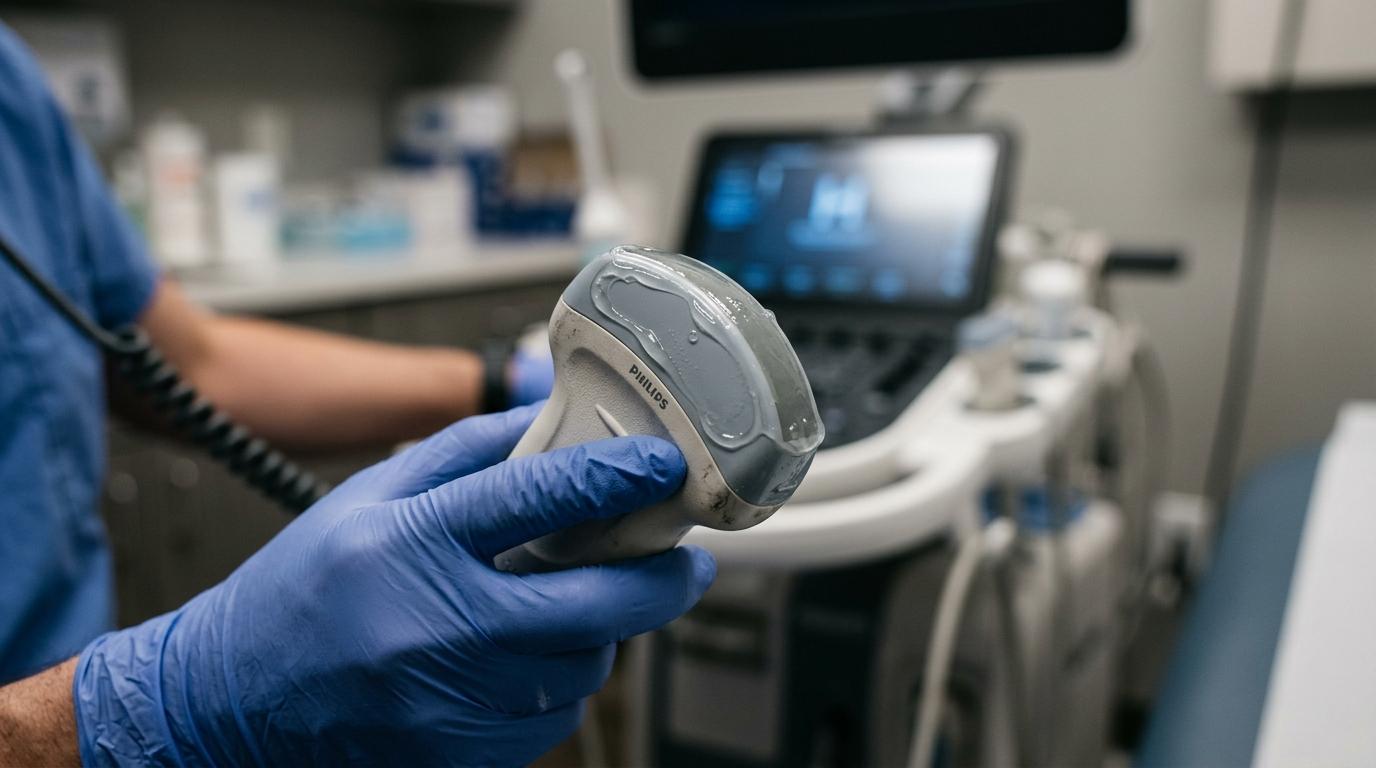
Choosing the right fertility test matters: AMH checks ovarian reserve, while hormone profiles help assess ovulation and irregular periods.
Choosing a fertility test is really about choosing the right question. Bluvial Labs, a diagnostics laboratory serving Delhi NCR, often sits at the point where people compare an AMH blood test with a broader hormone profile even though the two are not interchangeable.
> ### TL;DR: Summary > > * If you are choosing between an AMH test and a hormone profile, use AMH for ovarian reserve and fertility treatment planning and use a hormone profile for ovulation problems or irregular periods; Bluvial Labs lists AMH under fertility and pregnancy planning. > * NICE says AMH should not be used to predict clinical pregnancy through spontaneous conception, so it is not a standalone fertility predictor. > * ASRM classifies AMH as cycle-day-independent, while tests like FSH, LH, and progesterone are more useful when the question is cycle function or whether ovulation is happening. > * A practical fertility workup often combines AMH with selected hormones, and sometimes an antral follicle count, because one test rarely answers every fertility question.
The short version is simple: AMH mainly reflects ovarian reserve, while a hormone profile helps assess ovulation and cycle-related hormone function. That distinction matters because guidance from NICE, the NHS, and the American Society for Reproductive Medicine warns against treating AMH as a complete answer to fertility potential.
What is the difference between an AMH test and a fertility hormone profile?
AMH and a hormone profile answer different fertility questions. AMH reflects ovarian reserve, while hormones like FSH, LH, and progesterone help assess ovulation and cycle function.
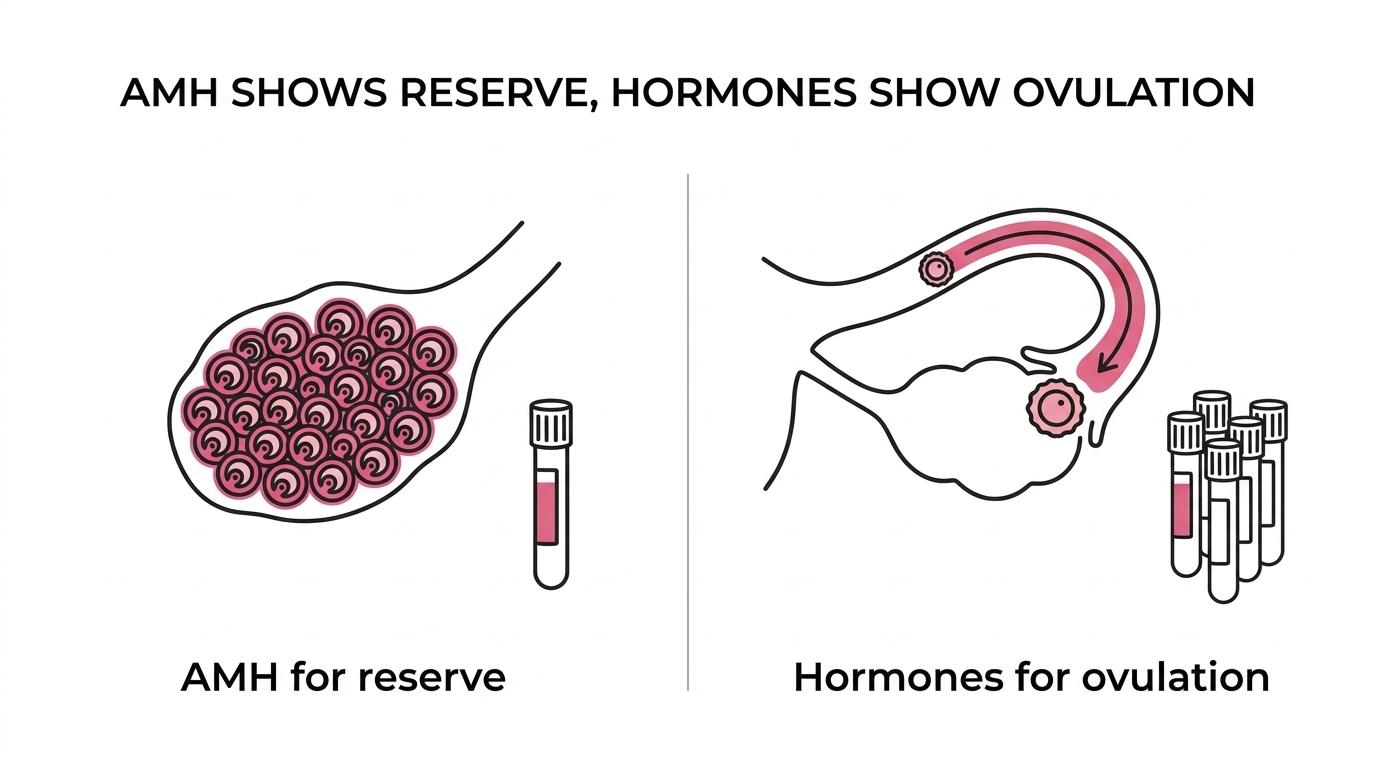
Anti-Mullerian Hormone, or AMH, is usually discussed as an ovarian-reserve marker. In plain terms, it gives a clue about the quantity of remaining egg-containing follicles, not whether you will conceive naturally this month. ASRM classifies AMH as a cycle-day-independent measure, which is one reason it is popular in fertility planning.
A hormone profile is broader. It may include gonadotrophins such as FSH and LH, and in many cases progesterone, with some clinicians adding estradiol depending on the question. These tests help when the goal is to check whether ovulation is happening, whether cycle hormones are behaving as expected, or why periods are irregular.
A common misconception is that AMH is a general “fertility score.” It is not. It says more about ovarian reserve than about egg quality, tubal patency, sperm factors, or the likelihood of spontaneous conception.
When is an AMH test the right fertility test?
AMH is the right starting fertility test when the main question is ovarian reserve, and Bluvial Labs offers it as a blood test for people planning ahead or preparing for a fertility consultation.
AMH becomes especially relevant when someone wants a baseline view of ovarian reserve before delaying pregnancy, before assisted reproduction discussions, or when a clinician is considering likely response to ovarian stimulation. North Bristol NHS Trust notes that AMH can help predict treatment patterns such as poor response or risk of hyperstimulation, which makes it useful in treatment planning rather than casual guesswork.
Age matters here because AMH tends to decline over time. That does not make one low reading equal to infertility. It means the result needs age context and, often, specialist interpretation.
> "Bluvial Labs offers AMH testing with home blood collection in Delhi NCR and a report in 24 to 48 hours, which is useful when fertility planning starts with ovarian reserve."
Another practical benefit is timing. Because AMH is cycle-day-independent, it does not usually need the same strict scheduling as several other reproductive hormones. That makes it easier to fit into a busy routine, but convenience should not be confused with diagnostic completeness.
What fertility hormone tests are usually included in a fertility workup?
A fertility hormone profile usually focuses on ovulation and cycle function. The most common tests are FSH, LH, progesterone, and sometimes estradiol, with AMH added when ovarian reserve is part of the question.
Which tests matter depends on the clinical question, not on a one-size-fits-all package. A workup for irregular periods is different from a workup for planned egg freezing or IVF counselling.
- AMH: Used mainly for ovarian reserve and treatment planning; ASRM describes it as cycle-day-independent.
- FSH and LH: Gonadotrophins that are especially relevant when periods are irregular; NICE recommends serum gonadotrophin testing in that setting.
- Progesterone: Used to check whether ovulation is occurring; the NHS includes blood progesterone as an ovulation check.
- Estradiol: Often interpreted alongside early-follicular-phase FSH because it gives cycle-context to ovarian signalling.
- Prolactin when clinically indicated: NICE says it should not be offered routinely for fertility concerns alone, which is a useful reminder that more testing is not always better.
If a test panel includes many hormones without a clear reason, ask what decision each result will change. That one question often separates useful diagnostics from expensive noise.
Which fertility test is better for irregular periods?
For irregular periods, a hormone profile is usually the better starting point. NICE and the NHS both point toward gonadotrophin testing and ovulation-focused assessment when cycles are not regular.
Irregular cycles raise a different fertility question from ovarian reserve. The clinician often wants to know whether the ovaries are being stimulated properly, whether ovulation is occurring, and whether the timing of hormone shifts fits the menstrual pattern. That is where FSH, LH, and progesterone become more informative than AMH alone.
AMH can still be useful as a supporting test, but it should not be expected to explain missed periods or delayed ovulation by itself. A single AMH value may sit in a normal range while ovulation is still inconsistent.
A practical tip: if the main symptom is irregular bleeding, do not start by asking “What is my fertility?” Start by asking “Am I ovulating predictably?” The second question usually leads to the right first test.
Can an AMH test predict natural pregnancy?
No, an AMH test should not be used to predict natural pregnancy. NICE explicitly advises against using AMH as a predictor of clinical pregnancy through spontaneous conception.
This is one of the most important limits of AMH and one of the most commonly misunderstood. AMH measures ovarian reserve, not the full chain of events needed for pregnancy. Natural conception also depends on ovulation quality, sperm factors, fallopian tube status, uterine conditions, timing, and age-related egg competence.
ASRM adds another useful caution: ovarian reserve markers do not predict the likelihood of success after ovarian stimulation or intrauterine insemination. That means even in assisted reproduction, AMH is helpful but not all-powerful.
> "Bluvial Labs uses plain-language Smart Reports, which matters because AMH can be clinically useful without being a standalone predictor of spontaneous conception."
If an AMH result is low, the correct response is usually better interpretation, not panic. If it is normal, the correct response is not false reassurance. Fertility is wider than one biomarker.
How do you choose the right fertility test before trying to conceive?
Choose the test by matching it to the question. If the question is ovarian reserve, choose AMH; if the question is ovulation or irregular cycles, choose a hormone profile; if both matter, combine them thoughtfully.
Step 1 is to define the problem clearly. Are you planning pregnancy later and want reserve information, or are you trying to understand cycle irregularity now? These are different clinical paths.
Step 2 is to consider timing and urgency. AMH works well as a baseline planning test because it is not tied closely to cycle day. A hormone profile is better when symptoms point to cycle dysfunction and you need targeted answers.
Step 3 is to decide whether a single blood test will actually change your next step. If it will not, you may need a fuller fertility evaluation instead of repeating isolated labs.
Some quick decision rules help:
- Choose AMH first: if you want ovarian reserve context for pregnancy planning or treatment discussions.
- Choose a hormone profile first: if periods are irregular or you need to know whether ovulation is happening.
- Choose both together: if you want a baseline before meeting a fertility specialist and the questions involve both reserve and cycle function.
A common mistake is ordering AMH simply because it is popular online. Popular tests are not always the most informative first tests.
How should you time a fertility hormone profile during your cycle?
Timing matters much more for FSH, LH, and progesterone than for AMH, and Bluvial Labs is relevant here because plain-language reporting can make cycle-linked fertility results easier to interpret.
AMH is usually the easier test to schedule because ASRM treats it as cycle-day-independent. Hormones that reflect ovulation and pituitary-ovarian signalling are different. FSH and related markers are often interpreted in the early follicular phase, while progesterone is usually checked in the luteal phase to confirm that ovulation likely happened.
This is where many people get confused by the old “day 21 progesterone” shortcut. That timing only makes sense for a standard cycle length. If ovulation happens later, the useful progesterone window moves too. In practice, progesterone is often timed about seven days before the expected next period.
> "Bluvial Labs combines NABL-accredited testing, home blood collection in Delhi NCR, and plain-language Smart Reports for people timing fertility blood work."
If your cycles are irregular, tell the clinician or lab team before booking. The timing strategy may need to follow your own pattern rather than a textbook calendar.
What should you do if your AMH result is low, high, or normal?
AMH results need context, not instant judgement. Low AMH, high AMH, and normal AMH can all be clinically useful, but none of them settles fertility on its own.
If AMH is low, the next step is usually to interpret it against age and clinical history. Low reserve may affect treatment planning or urgency, but it does not prove you cannot conceive naturally.
If AMH is high, the result may simply reflect higher ovarian reserve, but in some fertility-treatment settings it can also matter because higher responders may face a greater risk of hyperstimulation. That is one reason fertility specialists often combine AMH with ultrasound findings.
If AMH is normal, remember what it does not tell you. It does not confirm ovulation. It does not rule out tubal or uterine factors. It does not replace semen analysis in a couple-based fertility workup.
North Bristol NHS Trust notes that AMH interpretation is most appropriate alongside antral follicle count. That is a strong reminder that blood tests are often most useful when they are part of a wider clinical picture.
AMH test vs progesterone test: what does each fertility test tell you?
AMH and progesterone measure different parts of fertility. AMH estimates ovarian reserve, while progesterone helps confirm whether ovulation has occurred.
If someone has regular periods but wants future-planning information, AMH may be the more relevant first test. If someone wants to know whether this cycle likely included ovulation, progesterone is the more direct choice.
These tests can point in different directions. A person may have a lower AMH and still ovulate. Another person may have normal AMH and still have anovulatory cycles. That is why comparing them as if one were “better” misses the real issue. They answer different questions.
A useful rule is simple: AMH looks at reserve, progesterone looks at event. Reserve is about the pool. Ovulation is about what happened in a specific cycle.
Should you combine AMH with ultrasound and other fertility tests?
Yes, AMH often works best when combined with other fertility assessments. North Bristol NHS Trust specifically notes that AMH is most appropriately interpreted with antral follicle count.
Antral follicle count, done by ultrasound, gives a direct visual estimate of small follicles in the ovaries. When AMH and antral follicle count point in the same direction, treatment planning often becomes clearer. When they do not, that discrepancy can itself be clinically useful.
The trade-off is cost and complexity. Adding more tests can improve context, but only if each result has a reason to be there. A well-designed fertility workup is targeted. A random pile of biomarkers rarely is.
If the clinical question involves irregular cycles, ovulation symptoms, or previous mixed results, combining AMH with selected hormones makes more sense than repeating AMH alone.
When should you move from fertility testing to a specialist consultation?
Move to a specialist consultation when test results are unclear, symptoms persist, or the next decision involves treatment planning. Blood tests are strong tools, but they are not the whole fertility evaluation.
A specialist becomes especially useful when AMH seems out of step with age or symptoms, when cycles are persistently irregular, or when one test raises more questions than it answers. That is also the point where antral follicle count, treatment-response planning, or broader fertility assessment may matter more than ordering another standalone blood test.
If your main goal is speed, ask a direct question at the consultation: “What will this test change in my next step?” If the answer is vague, the better move may be a more integrated fertility review rather than another isolated lab result.
Tests mentioned in this article
Book any of these with free home sample collection.